
“Belly fat isn’t about calories,” says social media
A post like this has been spreading on X (formerly Twitter): “The number one reason your belly fat won’t drop isn’t calories — it’s the HPA axis (the stress-response system) that links your brain and adrenal glands. Cortisol receptors packed into visceral fat keep sending a ‘store fat’ command. So high-intensity cardio actually backfires; what you need isn’t calorie restriction but a ‘reboot of your neural infrastructure,’ such as sleep and sunlight.”
It’s a claim that feels like a relief — “so it wasn’t a lack of effort.” You see this kind of post again and again on social media. And it isn’t pure nonsense, either: the mechanism underneath it contains real science.
But when we line up what we’ve seen on the training floor and in the clinic against the endocrinology research, the parts that are accurate and the parts that are “inflated” separate out clearly. In particular, the two claims that “calories don’t matter” and “aerobic exercise makes you fatter” are at odds with current evidence.
This article isn’t here to dismiss the post out of hand. It sorts what’s true from what’s overstated — and then lays out what to actually do about it.
The 30-second version
- The mechanism “chronic stress → cortisol → visceral fat” has a real scientific basis — but that basis comes mainly from severe cases like Cushing’s syndrome and from basic research.
- Visceral fat may be more responsive to cortisol (for example, via an enzyme that locally regenerates cortisol inside the fat). However, whether the receptor differs by fat depot is not consistent across studies.
- “Cortisol is the biggest cause” and “calories don’t matter” are overstatements. A consistent correlation between obesity (BMI) and peripheral cortisol has not been confirmed in meta-analysis.
- Most of the routes by which cortisol adds fat run through increased appetite and insulin resistance — they don’t leap over the energy balance (calories).
- “High-intensity cardio accelerates fat storage” is contrary to the evidence. Across multiple meta-analyses, both aerobic exercise and HIIT (high-intensity interval training) reduce visceral fat.
- The post’s “six measures” (sleep, sunlight, low-intensity activity, breathing, blood-sugar stability, psychological safety) may be useful as lifestyle habits. But the strength of the evidence for a direct fat-reducing effect differs greatly from item to item.
Contents
- The terms used in this article
- What is the post actually claiming?
- What’s genuinely right — stress and cortisol are linked to visceral fat
- Where it gets overstated — neither the biggest cause nor calorie-independent
- What’s contrary to the evidence — cardio actually reduces visceral fat
- The post’s “six measures,” sorted by strength of evidence
- To be honest
- If you exercise
- For trainers and operators
- To learn more
The terms used in this article
Hormone discussions come with jargon. A quick look first makes the rest easier to read.
HPA axis (hypothalamic–pituitary–adrenal axis) — the body's stress-response system
A chain of commands, hypothalamus → pituitary → adrenal gland, that releases cortisol in response to stress. It’s named the HPA axis after Hypothalamic-Pituitary-Adrenal. This is what the post means by “the axis linking brain and adrenals.” It’s a real physiological system, and the term itself is used correctly. Note, though, that HPA-axis activity can’t be captured by a single number: morning blood cortisol, urinary cortisol, the salivary rhythm, the post-waking rise (the CAR, below), hair cortisol, and more are all separate measures.
Cortisol — the body's main stress hormone
A hormone secreted by the adrenal cortex. It maintains blood sugar, regulates the metabolism of fat, protein, and glucose, and helps the body cope with stress. It follows a daily rhythm (the diurnal pattern) — higher in the morning, falling toward night — and having that rhythm intact is itself a sign of health. It is not a “villain hormone”; it is essential for survival.
Glucocorticoid receptor (GR) — the antenna that receives cortisol
The docking site through which cortisol (a glucocorticoid) acts on a cell. The more of this receptor a tissue has, the more strongly cortisol affects it. It was once thought to be more abundant in visceral fat, but later human studies are inconsistent — some report no depot difference in people with obesity, and even lower GR in visceral fat in lean people.
Visceral fat and subcutaneous fat — two kinds of fat in different places
Visceral fat sits around the organs in the abdominal cavity and is strongly tied to risks such as diabetes and heart disease. Subcutaneous fat lies just under the skin. Even though both are “belly fat,” they behave differently — and the central question is whether cortisol acts preferentially to increase the visceral kind.
11β-HSD1 (11-beta-hydroxysteroid dehydrogenase type 1) — the enzyme that "regenerates" cortisol inside fat
An enzyme that locally converts inactive cortisone (a dormant state) into active cortisol (a working state). When this enzyme is active inside fat tissue, cortisol can be “working” inside the fat even when blood cortisol is normal. It’s one of the things that make the picture complicated: “blood cortisol can be normal and yet the fat tissue is still affected.”
Insulin resistance — when insulin works less effectively
A state in which insulin, the hormone that lowers blood sugar, works less effectively, so the body needs more of it. It’s a central driver of visceral obesity, type 2 diabetes, and metabolic syndrome — and cortisol pushes in the direction of making it worse.
Cortisol awakening response (CAR) — the rise in cortisol after you wake
The sharp rise in cortisol in the 30–45 minutes after waking. It’s thought to prepare you for the day’s activity, and its links to chronic stress and abdominal fat have been studied. The post’s idea of “syncing the cortisol spike with morning sunlight” relates to this phenomenon.
What is the post actually claiming?
Before testing it, let’s lay out the post’s claims neutrally. There are three main points.
First, that belly fat won’t drop not because of willpower or how much you eat, but because the HPA axis senses chronic stress and keeps over-producing cortisol. Second, that when cortisol runs away, the body decides it’s in “survival mode” and forcibly stores energy as visceral fat — and that high-intensity cardio itself becomes a new stressor that, if anything, accelerates fat storage. Third, that to break this cycle you need not calorie restriction but six measures: sleep, morning sunlight, low-intensity walking, slow breathing, blood-sugar stability, and psychological safety.
We’ll sort these three, in turn, into “right / overstated / contrary to the evidence.”
What’s genuinely right — stress and cortisol are linked to visceral fat
First, the underlying mechanism is real. Denying it would actually be inaccurate.
The clearest evidence is a disease called Cushing’s syndrome — a state in which a tumor or similar cause makes cortisol pathologically high, typically producing a distinctive body shape: fat gathering on the trunk and belly while the arms and legs grow thinner. That extreme cortisol increases visceral fat — this causal relationship is medically established.
So why the belly? Several studies suggest visceral fat may be more responsive to cortisol than subcutaneous fat. That said, whether the cortisol “antenna,” the glucocorticoid receptor, is more abundant in visceral fat is inconsistent across studies, so it can’t be stated as fact. On the other hand, an enzyme that locally “regenerates” cortisol inside fat tissue (11β-HSD1) has been reported by multiple studies to be increased in the fat tissue of people with obesity. These are the grounds for saying visceral fat is more responsive to cortisol.
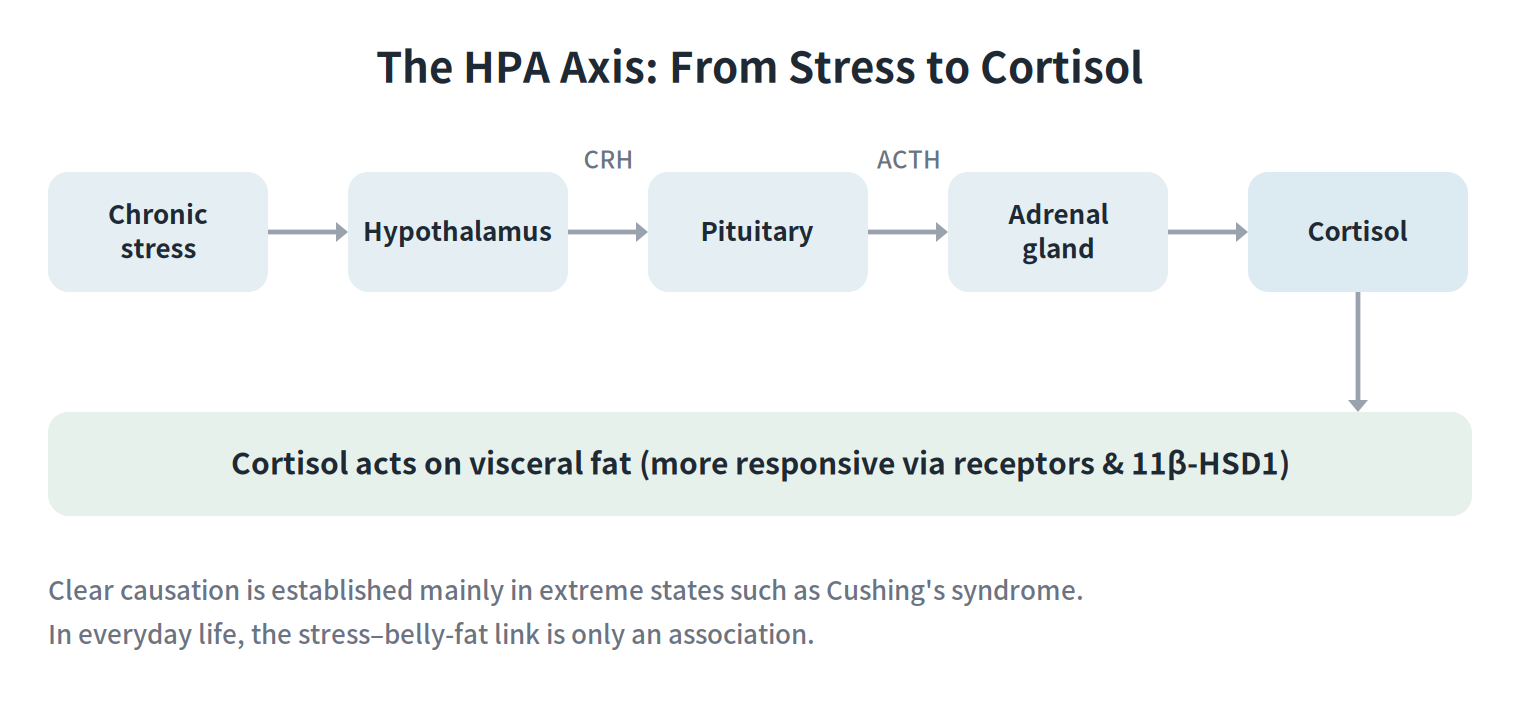
Figure 1. The HPA axis — from stress to cortisol
Even at everyday stress levels, an association is seen. In Epel and colleagues’ research, women who carry fat more around the waist (by waist-to-hip ratio) consistently secreted more cortisol in response to stress. Note, though, that this was a cross-sectional, laboratory study of 59 healthy women; it did not measure visceral fat directly (for example, by CT), and it did not prove that “higher stress reactivity causes more visceral fat.”
To sum up so far: the skeleton of the post — “chronic stress → cortisol → visceral fat” — is real as a mechanism. But it rests heavily on severe cases like Cushing’s syndrome and on basic research; whether everyday stress directly increases visceral fat in ordinary people stays largely at the level of association. The problem lies in what comes next: the “degree” and the “certainty of the claims.”
Where it gets overstated — neither the biggest cause nor calorie-independent
This is where the post hits the gas. The flat assertions “the biggest cause” and “calories don’t matter.” This is the part to handle most carefully.
Across populations, the link isn’t consistent
While causation is clear in “extreme cortisol” states like Cushing’s syndrome, in the range of ordinary people the picture is far murkier. A meta-analysis examining the relationship between BMI and peripheral cortisol (morning blood and 24-hour urinary) in healthy adults found no consistent correlation between obesity and the measured peripheral cortisol values (if anything, in people with obesity, peripheral cortisol tended to decline with age). Some earlier studies did report a negative association — “higher BMI, lower morning cortisol” — but that was not the conclusion of this meta-analysis itself; it was introduced in the introduction as prior work.
One more point: HPA-axis activity can’t be captured by a single number. Morning blood cortisol, 24-hour urinary cortisol, the salivary rhythm, the post-waking rise (CAR), hair cortisol — these are separate measures, and this meta-analysis covered only some of them. “Blood cortisol is normal” does not mean every aspect of the stress response is normal. That’s precisely why it isn’t a situation where you can call cortisol “the single biggest cause of weight gain.”
In fact, while peripheral cortisol (morning blood, 24-hour urinary) shows no consistent link with BMI, long-term glucocorticoids measured in hair (cortisol and cortisone) — which reflect a months-long average — do show small but consistent positive correlations with BMI and waist circumference in meta-analysis (146 cohorts, about 34,000 people). So it isn’t that “cortisol and obesity are unrelated” — what you see depends on which measure you use. That’s part of why this can’t be reduced to one story.
Cortisol doesn’t only “store” fat — it can “burn” it too
There’s another point the post oversimplifies. Cortisol’s effect on fat isn’t one-directional. In animal and cell studies, cortisol has been shown to work in both directions — toward making fat (adipogenesis) and toward breaking fat down (it doesn’t necessarily carry over directly to humans). “Cortisol = a command to relentlessly hoard fat” describes only half of what it does.
”Calories don’t matter” doesn’t hold up
So how does cortisol add fat? Most of the routes ultimately run through energy balance (calories). In Epel and colleagues’ experiment, people who released more cortisol under stress tended, after the stress, to eat more calories and choose more sweet foods. Chronic stress has also been reported to increase cravings for “comfort food.” On top of that, cortisol worsens insulin resistance.
Put simply, cortisol’s main routes to weight gain are to increase appetite, to make insulin less effective, and to bias where fat is deposited toward the viscera — they don’t leap over the law of energy balance. Cortisol moves “where and how much you want to eat,” but the foundation — the gap between what you eat and what you burn — doesn’t change. That’s why “calories don’t matter” is an overstatement.
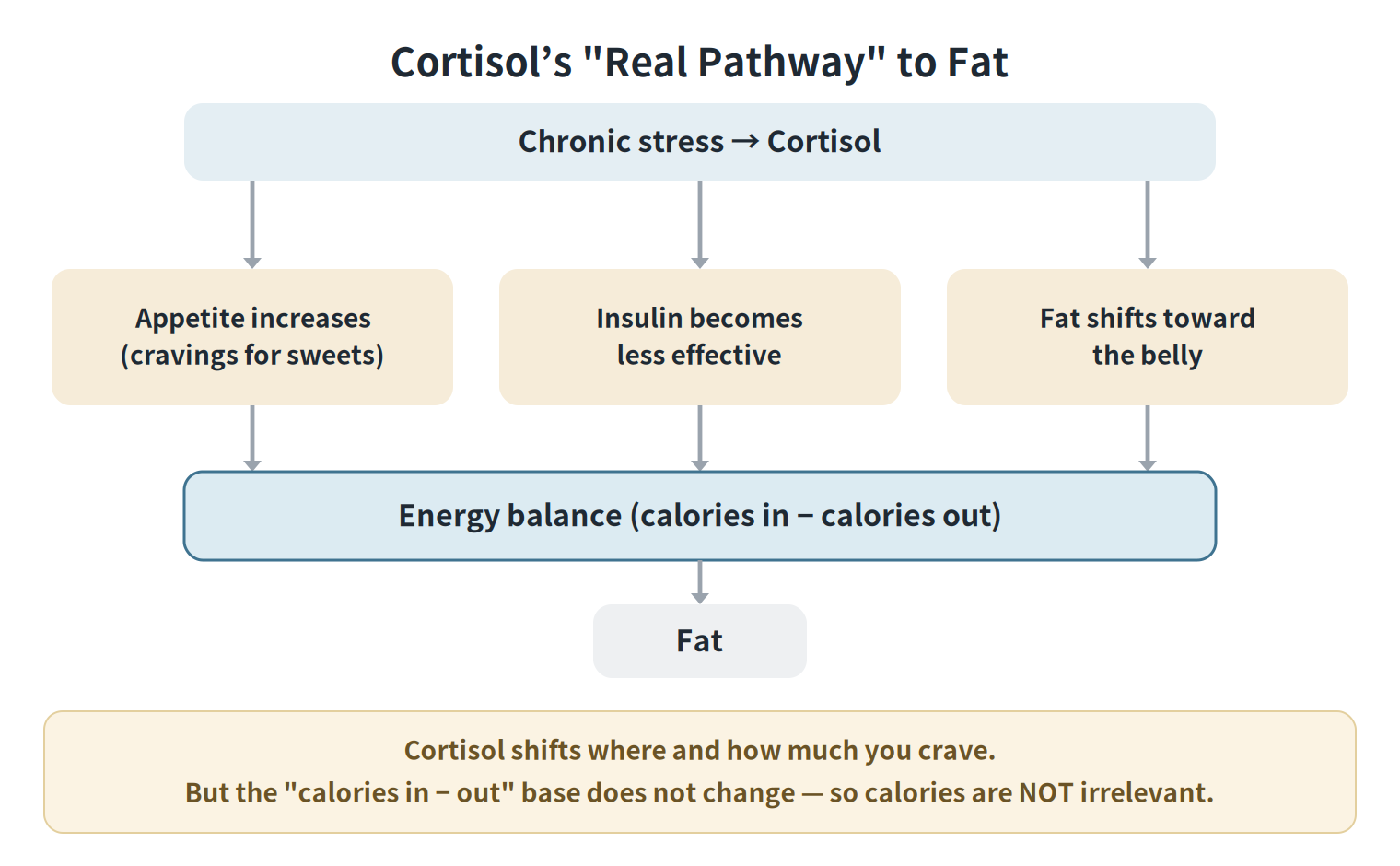
Figure 2. Cortisol doesn’t “leap over” calories
About the “Brigham Young University scientist”
The post cites “a metabolic scientist at Brigham Young University” as its source, but the post itself doesn’t identify who that is. If it refers to a metabolic scientist who communicates in this field there (for example, Benjamin Bikman), then that person’s popular books and research center on insulin resistance rather than cortisol — so the emphasis may differ from the post’s. Appeals of the form “a scientist at a famous university says so” can carry exactly this kind of mismatch. This does not mean that person endorses the post’s claims.
What’s contrary to the evidence — cardio actually reduces visceral fat
This is the claim we most want to flag. “High-intensity cardio raises cortisol and, if anything, triggers a bug that accelerates fat storage.” This runs squarely against current evidence.
A large meta-analysis examining how exercise affects visceral fat (117 studies, about 4,800 people) found that both exercise and calorie restriction reduce visceral fat. Calorie restriction produced larger weight loss, while exercise tended to be better at reducing visceral fat specifically (this is at the level of a trend rather than a clearly statistically significant difference). Another meta-analysis showed that even aerobic exercise without calorie restriction significantly reduced visceral fat. And for the high-intensity exercise the post singles out, there’s a meta-analysis (39 studies, 617 people) showing that high-intensity interval training (HIIT) significantly reduced total, abdominal, and visceral fat alike. In other words, “high-intensity cardio increases visceral fat” is exactly backwards.
It’s true that cortisol rises temporarily during exercise. But this is a normal response, not a malfunction. Cortisol works briefly to mobilize the energy (glucose and fat) the exercise needs, then falls once the exercise ends. Reading that transient rise as a “fat-hoarding switch” is a mistake.
The one “kernel of truth” in the post is that chronic overtraining without recovery can keep cortisol elevated and impair recovery and body composition. But that’s not “cardio is bad” — it’s “too much, with too little rest, is bad,” a matter of load management. Aerobic exercise at an appropriate intensity, with recovery, is an ally in reducing visceral fat.
One more note. The post lists “sunlight within 30 minutes of waking” as a measure, and that itself is reasonable — but the mechanism is often misunderstood. At least in laboratory studies, moving from dim to bright light in the morning raised cortisol by more than 50%, immediately. That’s a finding under controlled laboratory light, though, and you can’t assume an ordinary “morning sunbath” raises cortisol by the same amount. Sunlight’s value is not to “lower cortisol” but to set the circadian rhythm — “high in the morning, low at night.”
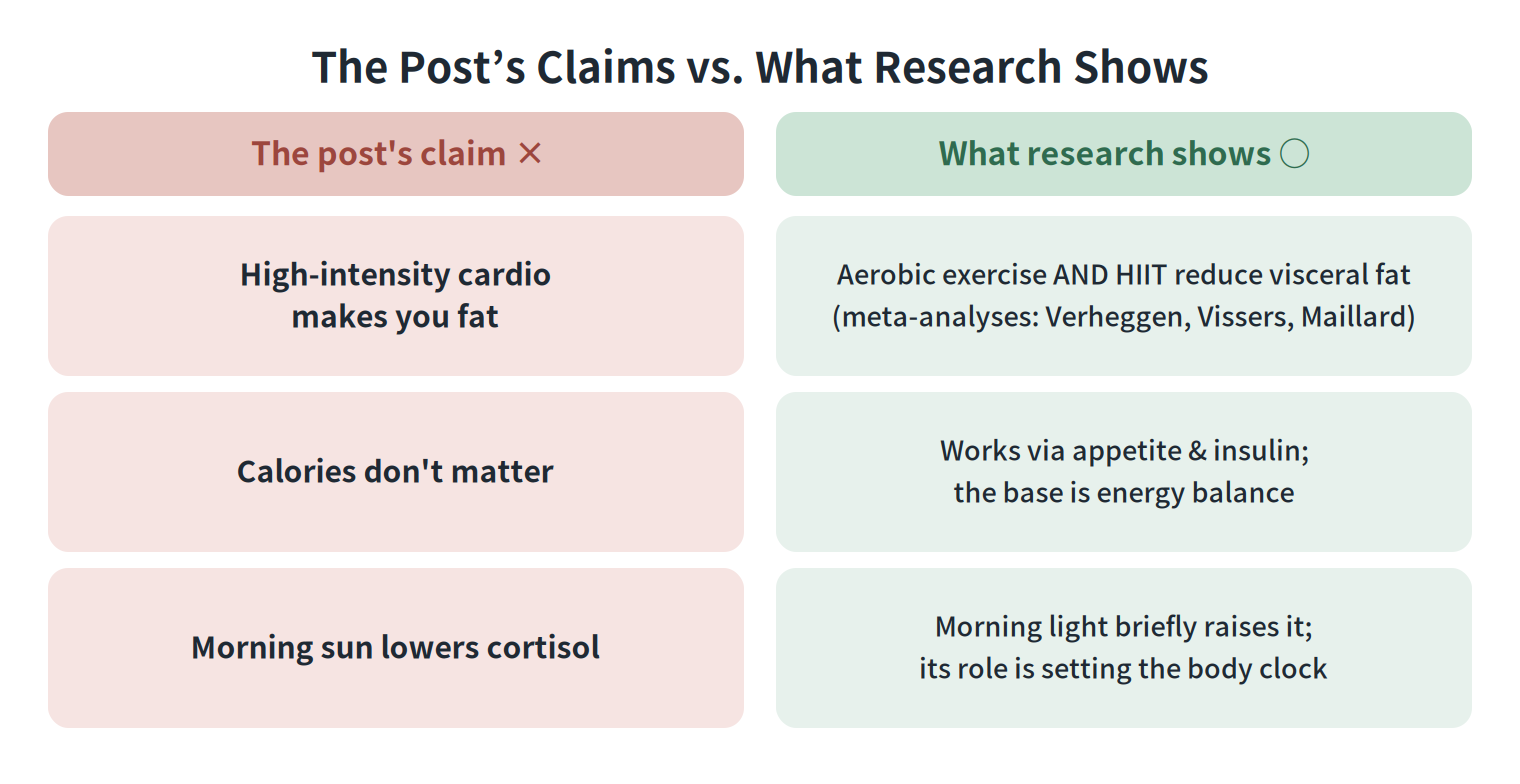
Figure 3. The post’s claims vs. what research shows
The post’s “six measures,” sorted by strength of evidence
By this point you might think, “So are the post’s six measures meaningless?” Not at all. The measures themselves are largely reasonable. The thing to watch is that the strength of the evidence that each one directly “reduces visceral fat” differs greatly. Compared with exercise and diet intervention trials, lining up breathing, morning sunlight, and psychological safety as “fat-loss measures” can make their effects look more established than they are. Here’s the sorting, one by one.
| The post’s measure | Where it fits | Comment |
|---|---|---|
| 1. Better sleep quality | May help as a lifestyle habit | Sleep loss can affect appetite and hormonal balance. A foundation. |
| 2. Morning sunlight | May help set the circadian rhythm | Sets the rhythm. But morning cortisol “rising” is normal. |
| 3. Low-intensity walking | May help (with a caveat) | A good habit — but the implication that “you should avoid hard exercise” is wrong. |
| 4. Slow exhale-focused breathing | Supportive (mild effect) | Can shift you toward the parasympathetic state and ease acute stress. |
| 5. Blood-sugar stability | May help as an eating-behavior tactic | Steady meals over extreme fasting; helps prevent overeating and post-meal slumps. |
| 6. Psychological safety | May help with stress management | Chronic psychological stress activates the HPA axis. |
In short, these may be useful as habits that put sleep, activity, eating behavior, and the stress response in order. But for reducing visceral fat, energy balance is still the foundation, and exercise (including aerobic exercise) is also beneficial. This isn’t “lose weight with these six alone” — it’s something to combine with diet, exercise, sleep, and the rest.
To be honest
Having sorted “here the post is right, here it’s overstated,” there’s something we should add in good faith.
The relationship between cortisol and visceral fat is, in reality, quite complex and varies a lot between individuals. And a pathologically high-cortisol state like Cushing’s syndrome is on a completely different level from everyday stress. That central obesity occurs in the former is established; tying that directly to “the single biggest reason ordinary people can’t lose belly fat” is a stretch. Moreover, high-quality evidence that “lowering cortisol makes you lose weight” — in the range of ordinary people — is thin in reality. Stress reactivity has been reported to vary by genetics, sex, and prior experience, so there is no “single answer that fits everyone.”
That’s exactly why we’re wary of the single-cause story — “the reason you can’t lose belly fat is X.” Cortisol, insulin, sleep, diet, exercise — each is a factor. Casting one hormone as the “true culprit” is easy to follow, but it usually leaves something out.
Stress care matters. Sleep, sunlight, and breathing all have real value for health. But they work not as a replacement for energy balance and exercise, but in combination with them — and that, from both the research and the floor, is the most honest conclusion.
If you exercise
For those about to change their bodies, and those worried about belly fat, here’s how to put this into practice.
- Don’t stop aerobic exercise. “Cardio makes you fat” is not true. Aerobic exercise at an appropriate intensity, with recovery, is a strong tool for reducing visceral fat.
- The calorie (energy-balance) foundation doesn’t disappear. Stress care helps, but it isn’t magic that leaps over the basic gap between what you eat and what you burn.
- If you have chronic stress or sleep loss, it’s well worth addressing. It can make appetite easier to control and may help your overall health — but as “setting the foundation,” not “a shortcut to weight loss.”
- Don’t expect a fat-loss shortcut from supplements or hacks that claim to “lower cortisol.” It isn’t as simple as manipulating one hormone to lose weight.
In particular, if strong stress or insomnia persists, we suggest reviewing your daily rhythm and rest alongside exercise and diet. If symptoms that concern you persist, or if you have a medical condition or take medication, please consult a physician before self-prescribing supplements.
For trainers and operators
This kind of post spreads widely, and clients who believe “cardio is useless” or “it’s all cortisol’s fault” may increasingly show up to sessions. Here, finally, is how to engage on the floor.
Rather than dismissing it outright, acknowledge the accurate core (stress, sleep, and recovery matter), then gently correct the errors (that cardio adds fat, that calories don’t matter) with evidence — that’s the way to keep trust. In fact, the “overtraining and recovery” and “sleep and stress” the post touches on are perspectives worth building into program design. Move away from endlessly grinding at high intensity, toward a design that builds in proper recovery.
And from the standpoint of advertising and health-claim norms, avoid flat causal assertions or efficacy claims such as “lower cortisol and you’ll lose weight,” “stabilize blood sugar and the fat falls off,” or “this supplement cures stress-related weight gain.” Hormone and metabolism topics are easy to misread, and definitive wording carries legal risk. Keep it to general health information, and leave individual conditions to the client and to medical professionals — that’s safe, honest communication.
To learn more
If you want the “mechanism” of cortisol and visceral fat
Studies on the foundations of the stress-hormone–fat relationship the post touches on. All are interesting, but the depot differences and causation in humans need to be read carefully.
-
Boullu-Ciocca S, Paulmyer-Lacroix O, Fina F, Ouafik L, Alessi MC, Oliver C, Grino M. Expression of the mRNAs coding for the glucocorticoid receptor isoforms in obesity. Obes Res. 2003;11(8):925-929. doi:10.1038/oby.2003.127. PMID:12917495. → A study of glucocorticoid-receptor isoform mRNA expression in obesity. It does not directly prove the simple claim that “visceral fat has more receptors”; note that the depot difference in receptors is not consistent across studies.
-
Desbriere R, Vuaroqueaux V, Achard V, et al. 11beta-hydroxysteroid dehydrogenase type 1 mRNA is increased in both visceral and subcutaneous adipose tissue of obese patients. Obesity (Silver Spring). 2006;14(5):794-798. doi:10.1038/oby.2006.92. PMID:16855188. → Showed that the enzyme that locally regenerates cortisol (11β-HSD1) was increased in both the visceral and subcutaneous fat of people with obesity.
-
Alberti L, Girola A, Gilardini L, et al. Type 2 diabetes and metabolic syndrome are associated with increased expression of 11beta-hydroxysteroid dehydrogenase 1 in obese subjects. Int J Obes (Lond). 2007;31(12):1826-1831. doi:10.1038/sj.ijo.0803677. PMID:17593901. → Showed an association between type 2 diabetes / metabolic syndrome and the same enzyme. Note that which fat depot it increases in differs across studies (here it was shown in subcutaneous fat).
If you want why “cortisol = the biggest cause” is overstated
A critically important source showing the link isn’t consistent across populations.
-
Tenk J, Mátrai P, Hegyi P, et al. In obesity, the hypothalamic-pituitary-adrenal axis activity does not increase with BMI, but declines with aging: a meta-analysis of clinical studies. PLoS One. 2016;11(11):e0166842. doi:10.1371/journal.pone.0166842. PMID:27870910. → A meta-analysis of the relationship between obesity and peripheral cortisol (morning blood and 24-hour urinary). It found no consistent correlation with BMI, and showed that in people with obesity, peripheral cortisol declines with age. Note that “higher BMI, lower morning cortisol” is not this paper’s conclusion but prior work introduced in its introduction.
-
van der Valk E, Abawi O, Mohseni M, et al. Cross-sectional relation of long-term glucocorticoids in hair with anthropometric measurements and their possible determinants: a systematic review and meta-analysis. Obes Rev. 2022;23(3):e13376. doi:10.1111/obr.13376. PMID:34811866. → A meta-analysis pooling about 34,000 people (146 cohorts). Long-term glucocorticoids in hair (cortisol and cortisone), which reflect a months-long average, showed small but consistent positive correlations with BMI, waist circumference, and WHR. A useful counterpoint to the peripheral measures: morning blood and urine are inconsistent, but long-term measures do show a link.
-
Campbell JE, Peckett AJ, D’souza AM, Hawke TJ, Riddell MC. Adipogenic and lipolytic effects of chronic glucocorticoid exposure. Am J Physiol Cell Physiol. 2011;300(1):C198-C209. doi:10.1152/ajpcell.00045.2010. PMID:20943959. → Showed cortisol works in both directions on fat — “making” it and “breaking it down” (a rat / cell study, so generalizing to humans needs care).
If you want the link between stress and eating behavior
Studies showing the route by which cortisol works via “appetite.” Both are small; Epel 2001 is a laboratory study and Epel 2000 is cross-sectional — not proof of causation.
-
Epel E, Lapidus R, McEwen B, Brownell K. Stress may add bite to appetite in women: a laboratory study of stress-induced cortisol and eating behavior. Psychoneuroendocrinology. 2001;26(1):37-49. doi:10.1016/S0306-4530(00)00035-4. PMID:11070333. → An experiment (59 healthy premenopausal women) showing that women who release more cortisol under stress tended, afterward, to eat more calories and choose more sweet foods.
-
Epel ES, McEwen B, Seeman T, et al. Stress and body shape: stress-induced cortisol secretion is consistently greater among women with central fat. Psychosom Med. 2000;62(5):623-632. doi:10.1097/00006842-200009000-00005. PMID:11020091. → A study (59 women) showing that women who carry fat more around the waist (by waist-to-hip ratio) have a larger cortisol response to stress. Central fat was assessed by WHR, not measured directly as visceral fat by CT/MRI.
If you want why “aerobic exercise backfires” is wrong
Large-scale evidence that exercise reduces visceral fat.
-
Verheggen RJHM, Maessen MFH, Green DJ, Hermus ARMM, Hopman MTE, Thijssen DHT. A systematic review and meta-analysis on the effects of exercise training versus hypocaloric diet: distinct effects on body weight and visceral adipose tissue. Obes Rev. 2016;17(8):664-690. doi:10.1111/obr.12406. PMID:27213481. → 117 studies, about 4,800 people. Both exercise and calorie restriction reduce visceral fat, with exercise tending to be better at reducing visceral fat specifically (a trend rather than a clearly significant difference). Clearly contradicts “cardio adds fat.”
-
Vissers D, Hens W, Taeymans J, et al. The effect of exercise on visceral adipose tissue in overweight adults: a systematic review and meta-analysis. PLoS One. 2013;8(2):e56415. doi:10.1371/journal.pone.0056415. PMID:23409182. → A meta-analysis showing that even aerobic exercise without calorie restriction significantly reduces visceral fat.
-
Maillard F, Pereira B, Boisseau N. Effect of high-intensity interval training on total, abdominal and visceral fat mass: a meta-analysis. Sports Med. 2018;48(2):269-288. doi:10.1007/s40279-017-0807-y. PMID:29127602. → 39 studies, 617 people. Showed that high-intensity interval training (HIIT) significantly reduces total, abdominal, and visceral fat alike. A direct rebuttal that even the “high intensity” the post objects to reduces fat.
If you want the link between morning light and cortisol
- Leproult R, Colecchia EF, L’Hermite-Balériaux M, Van Cauter E. Transition from dim to bright light in the morning induces an immediate elevation of cortisol levels. J Clin Endocrinol Metab. 2001;86(1):151-157. doi:10.1210/jcem.86.1.7102. PMID:11231993. → In the lab, moving from dim to bright light in the morning raised cortisol by more than 50%, immediately. Shows that morning light “relates to a healthy rise,” not “lowers cortisol” (a laboratory condition, so generalizing to everyday sunlight needs care).
If you want the opposing view that “insulin is the lead”
- Bikman B. Why We Get Sick. BenBella Books; 2020. → A popular book (not a peer-reviewed paper). It argues the position that the dominant hormone governing fat storage is insulin, not cortisol. Who the post’s “Brigham Young University scientist” refers to can’t be identified, but that university’s metabolic scientist communicates with insulin resistance as the central theme.
This article is medically supervised by Takeshi Shimizu, MD, a board-certified orthopedic surgeon at Dr. Buddy. Its content is based on peer-reviewed research, but the relationship between cortisol and body composition varies between individuals, and the best approach differs from person to person. If you have persistent strong stress or insomnia, a medical condition, or are under treatment, please consult your physician before self-prescribing supplements or dietary restriction. This article provides general health information; it is not intended to claim the efficacy of any specific product, nor to diagnose or treat any specific disease.